Introduction – Highlight Need and Use Case
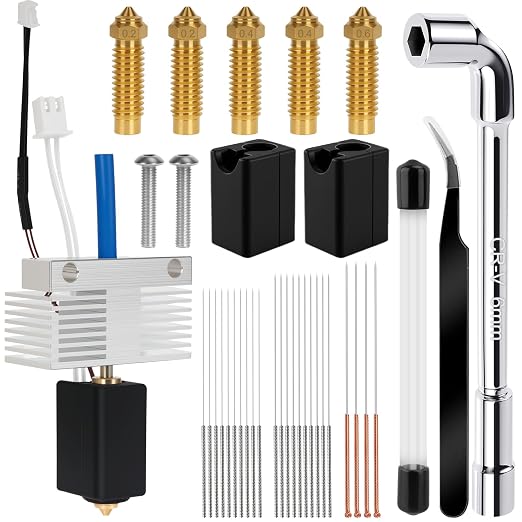
When diving into the world of 3D printing, especially with larger models like the Neptune 4 Plus or Max, the efficiency and reliability of your hotend are crucial. Initially, I approached the Hotend Kit for Neptune 4 Plus/Max with some skepticism. Would this kit really deliver on the detailed claims? Could it truly enhance the 3D printing experience without ongoing hassles? With several components and accessories packaged together, it seemed almost too good to be true. I decided to find out.
Pros & Cons – Bullet List Format
Pros
- Comprehensive Kit with a total of 37 parts, including multiple nozzles and cleaning needles, fits various maintenance needs.
- Strong Compatibility with the Neptune 4 Plus and Max, ensuring a seamless fit.
- High-Temperature Resistance up to 300℃, ideal for various filaments like PLA, PETG, ABS, and ASA.
- Efficient Heat Dissipation thanks to the aluminum alloy design, reducing chances of nozzle clogging.
- Precision in Nozzle Design ensuring smooth feeding with minimal clogging or filament leakage.
Cons
- Compatibility Limitation limited only to Neptune 4 Plus and Max models, alienating other 3D printer users.
- Initial Setup Complexity may be intimidating for beginners without prior hotend modification experience.
- Price Point could be seen as high given the specific model compatibility.
Comparison – Short Competitor Comparison
When comparing this hotend kit to alternatives like the E3D V6 or Micro Swiss all-metal hotends, one notable advantage stands out: this kit's specific customization for the Neptune series. While the E3D V6 offers broad compatibility across multiple printer brands, the pinpointed design of this kit allows for a potentially smoother setup and better performance for Neptune-specific users. However, brands like E3D may offer more flexibility for swapping between different models and printers, making them a more appealing choice for users planning to upgrade or switch printers in the future.
User Tips / Usage Guide
- Thoroughly Check Compatibility: Ensure that you have a Neptune 4 Plus or Max to avoid installation issues.
- Familiarize with Parts: Before starting installation, lay out all parts and review the accompanying instructions to avoid confusion.
- Level the Printer Bed: Post installation, re-level the bed to ensure accurate printing and prevent potential damage.
- Test with Multiple Nozzles: Use the different nozzle sizes included to determine which works best with your filament type.
- Regular Cleaning: Utilize the cleaning needles provided to maintain nozzle cleanliness and optimal performance.
- Gradual Heat Testing: Begin with lower temperatures and gradually increase to recommended levels to prevent overheating the new components.
- Watch for Firmware Updates: Make sure your printer’s firmware is up-to-date to support new hardware adjustments.
- Document Settings: Record any new settings or adjustments for easy reference in future print jobs.
Conclusion – Who Should Buy This
Against my initial expectations, the Hotend Kit for Neptune 4 Plus/Max proved to be a valuable asset for dedicated Neptune users aiming to enhance their 3D printing capabilities. This kit is particularly beneficial for users with experience in printer maintenance or those willing to invest the time in learning, thanks to its precise engineering and high compatibility with the Neptune models. Beginners may face a steeper learning curve but will ultimately benefit from the kit's enhanced printing precision and reduced maintenance needs. If you're committed to optimizing your Neptune 3D printer, this kit is a commendable investment.