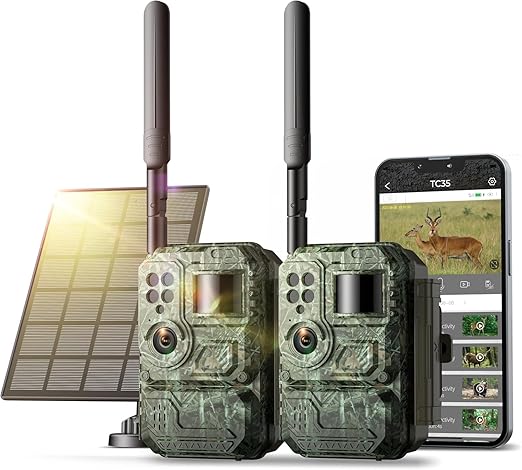
Introduction – Highlight Need and Use Case
When I first laid my eyes on the VOOPEAK Cellular Trail Camera, complete with live streaming and a solar panel, I couldn't help but feel a touch skeptical. A trail camera boasting 4K video quality, robust night vision, and continuous solar-powered operation seemed almost too good to be true. Not to mention the claim of a 0.1s trigger speed combined with two-way audio functions. I expected the complexities of technology to maybe stumble somewhere, particularly in remote, challenging outdoor environments. Trail cameras are notorious for their limits, often suffering from delayed triggers, blurry night footage, and battery drain. Yet, I was pleasantly surprised to find that against my initial expectations, this VOOPEAK model indeed rises to the challenge.
Pros & Cons
- Pros:
- 4G connectivity means it operates without WiFi, adding to its versatility.
- Solar power integration significantly extends the operational life.
- Impressively clear 2K HD live streaming, a boon for real-time monitoring.
- Quick 0.1s trigger speed captures motion promptly.
- Two-way audio provides an unusual but useful means of interaction.
-
Durable IP66 weatherproof rating ensures robustness across climates.
-
Cons:
- Continuous cellular connectivity can become costly if not managed well.
- Initial setup may be slightly complex for those less tech-savvy.
- Data plan required for full functionality beyond initial trial period.
- Larger size may not be as easily concealable as other models.
Comparison
Comparing the VOOPEAK Cellular Trail Camera to some of its competitors such as the SPYPOINT Link-Micro-LTE, what stands out most is VOOPEAK’s emphasis on complete independence from WiFi due to the built-in 4G SIM. Moreover, SPYPOINT's offering might appeal with a slightly lower monthly data plan, but it lacks the two-way audio and solar capabilities intrinsic to the VOOPEAK. Other popular models like the Bushnell CORE S-4K provide superior image resolution, yet the trade-off often comes with reduced battery life and a lack of cellular features. Overall, while VOOPEAK may require a more substantial initial and monthly investment, the trade-up in features and autonomous operation truly sets it apart.
User Tips / Usage Guide
- Opt for the annual data plan: If you anticipate continuous use, the yearly plan is more economical and removes monthly hassles.
- Familiarize with the app features: This will allow you to maximize its potential, especially the two-way audio and live streaming functions.
- Position wisely: Its IP66 rating is robust, but optimal placement will still enhance performance and longevity.
- Charge initially via a power outlet: Though solar-powered, starting with a full charge ensures immediate and prolonged usability.
- Regularly update the firmware: Stay tuned with the app for software updates to maintain functionality and security.
- Test trigger sensitivity settings: Adjusting these settings can optimize what gets recorded and prevent false triggers.
- Conceal properly despite the larger size: Its larger build can make it standout, so use natural elements to hide it effectively.
- Monitor your data usage: Streaming live video often can eat up data quickly; adjust usage habits as needed.
Conclusion – Who Should Buy This
For avid wildlife enthusiasts, property managers, or anyone needing a reliable, autonomous outdoor surveillance solution, the VOOPEAK Cellular Trail Camera is a worthy investment. It offers a compelling blend of advanced features aimed at delivering uninterrupted service, even in the remotest locations. Its independence from electricity and WiFi, paired with the reassurance of live monitoring and communication capabilities, provides a unique ecosystem of surveillance. While it comes at a cost, both initial and ongoing, the long-term value for those in need of a robust and high-tech trail solution makes it ideal. Certainly, my skepticism was mitigated by the camera's capabilities, proving it to be a valuable asset for those committed to outdoor monitoring and interaction.